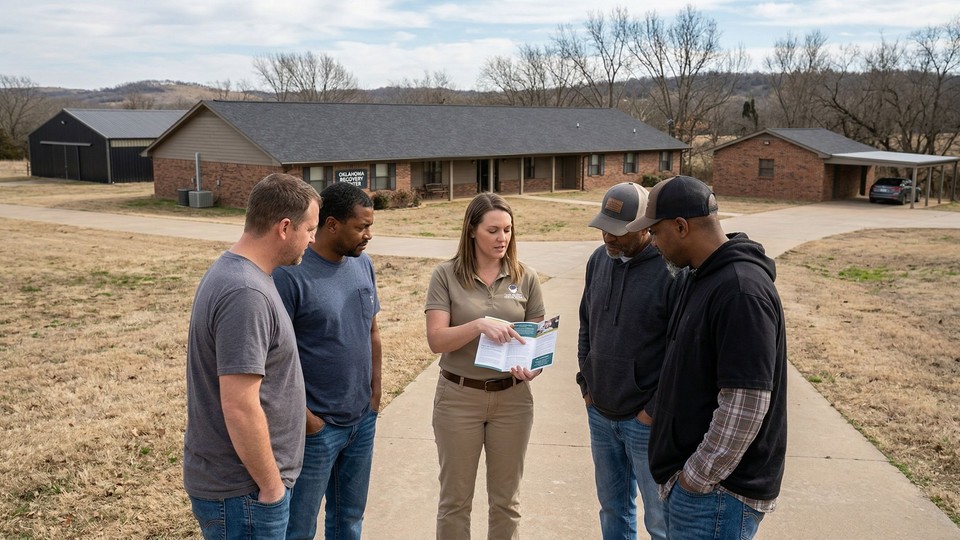
Frequently Asked
Questions
Deciding on treatment is a major step. Here are honest, detailed answers to the questions we hear most from men and their families.
What You Need to Know
Clay Crossing is a structured, evidence-based residential program built exclusively for men. Here is the short version before we get into the details.
Men Only, 28 Max
A small, focused community of adult men (18+) where every resident gets individualized clinical attention from a staff of 16.
30, 60, or 90+ Days
Program length is determined by clinical assessment using ASAM criteria. Longer stays are available when needed.
CARF Accredited
Independently evaluated and held to internationally recognized standards for quality care, safety, and program management.
About Our Program
What is Clay Crossing?
Clay Crossing Foundation is a nonprofit, CARF-accredited residential addiction treatment center for adult men ages 18 and older near Maud, Oklahoma, about 60 miles from Oklahoma City. Our program has been treating men with substance use disorders for over 20 years. We only allow a limited number of residents at a time, which keeps the community small and allows for genuinely individualized care from a dedicated staff of 16.
What substances and conditions do you treat?
Clay Crossing treats alcohol use disorder, opioid use disorder, and stimulant use disorder. We are also a state-certified co-occurring treatment facility, meaning our clinical team is equipped to treat addiction alongside mental health conditions like depression, anxiety, and PTSD. If you have been through treatment before and experienced relapse, we have specific experience working with men in that situation.
Alcohol Use Disorder
Opioid Use Disorder
Stimulant Use Disorder
Co-Occurring Disorders
Do I have to be Christian to attend?
No. Clay Crossing is faith-based and spirituality is part of the program’s foundation, but no belief system is required or forced on residents. The spiritual component is there for those who want it, and men of all backgrounds and belief systems are welcome.
How long are the programs?
Program length is determined based on clinical assessment and each person’s treatment plan. Our team uses ASAM criteria and the Addiction Severity Index to guide those decisions.
A focused, high-intensity foundation for men with shorter clinical need.
Extended time for deeper therapeutic work and co-occurring conditions.
Long-term care for men who need maximum structure and clinical support.
What types of therapy are used?
Our clinical team uses several evidence-based approaches. Cognitive Behavioral Therapy helps identify and change the thought patterns that fuel substance use. Dialectical Behavior Therapy focuses on mindfulness, emotional regulation, and distress tolerance, which is especially useful for men with co-occurring mental health conditions. Family therapy is part of the model, working to rebuild communication and strengthen relationships. The program also incorporates 12-step principles through AA, NA, and Al-Anon participation.
Cognitive Behavioral Therapy
Identify and rewire negative thought patterns.
Dialectical Behavior Therapy
Mindfulness, emotional regulation, distress tolerance.
Family Therapy
Rebuild communication and strengthen relationships.
12-Step Integration
AA, NA, and Al-Anon participation.
Ready to Reclaim
Your Life?
Our admissions team is available 24/7 to answer your questions, verify your insurance, and guide you through the next steps. You don’t have to do this alone.
Life at Clay Crossing
What does a typical day look like?
Days are structured and start early. Breakfast is at 6:30 a.m., followed by group sessions from 8:30 a.m. to about 12:15 p.m. with breaks. After lunch, groups pick back up from 1:30 to 3:30 p.m. Dinner is at 5:00 p.m., and study groups run from 6:30 to 8:00 p.m. Outside of scheduled programming, residents have free time for exercise, recreation, and personal reflection.
Are cell phones allowed?
No. Cell phones and any devices with internet or camera capabilities are not permitted at Clay Crossing. Residents can make phone calls during scheduled evening call times and are encouraged to bring stationery, stamps, and paper for letter writing. This policy is intentional and based on over two decades of experience — it removes distractions and helps residents focus fully on their recovery without the pull of social media, texting, or outside drama during a critical time.
Can my family visit?
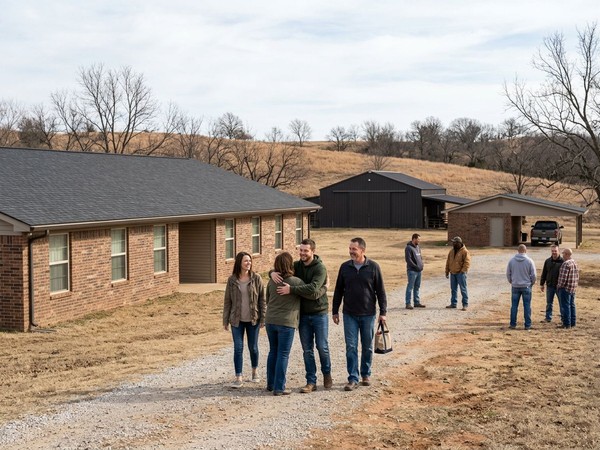
Yes. Weekend visitation is available for preapproved visitors, and Clay Crossing actively encourages family involvement in the recovery process. As residents progress through treatment, they can also earn day passes and overnight passes.
Your designated contact person will be notified shortly after your arrival. Family counseling and education are part of the program as well, so your loved ones are included in the process, not kept at arm’s length.
Is there a smoking policy?
Clay Crossing is a tobacco-free facility per Oklahoma Department of Mental Health and Substance Abuse requirements. There is a designated off-campus smoking area available during scheduled breaks. We also provide a free quit-smoking program for residents who want to address nicotine use during treatment. You can bring nicotine replacement products like patches, gum, or lozenges with you at intake.
About Our Standards
What is CARF accreditation and why does it matter?
CARF International (the Commission on Accreditation of Rehabilitation Facilities) is an independent organization that has been accrediting health and human service providers since 1966. A CARF accreditation means Clay Crossing has been evaluated by an outside body and meets established standards for quality care, safety, and program management. When you are comparing treatment centers, accreditation is one of the clearest signals that a program has been held to external accountability, not just its own internal standards.
What makes Clay Crossing different?
While faith is part of the foundation, the clinical work is evidence-based: CBT, DBT, trauma-informed care, and medication management are all part of the model.
Remote by Design
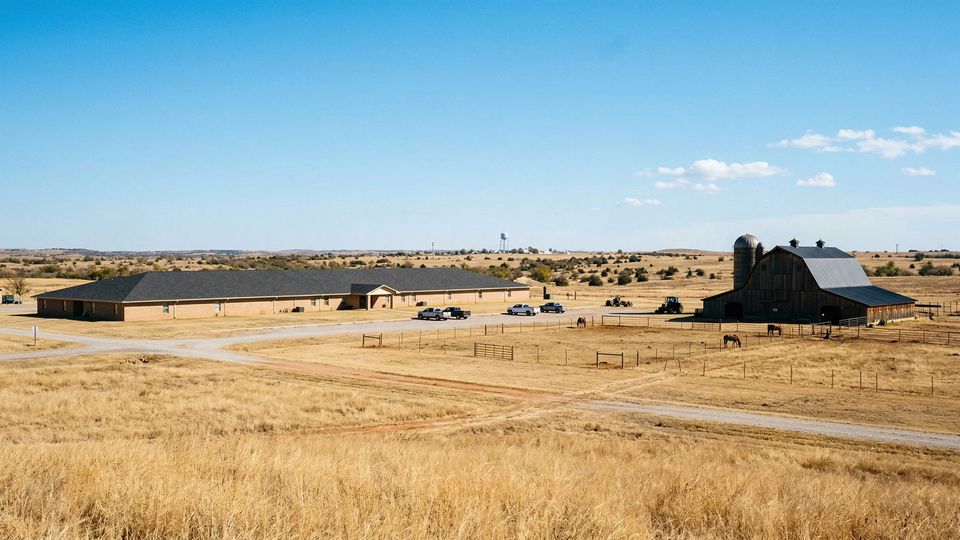
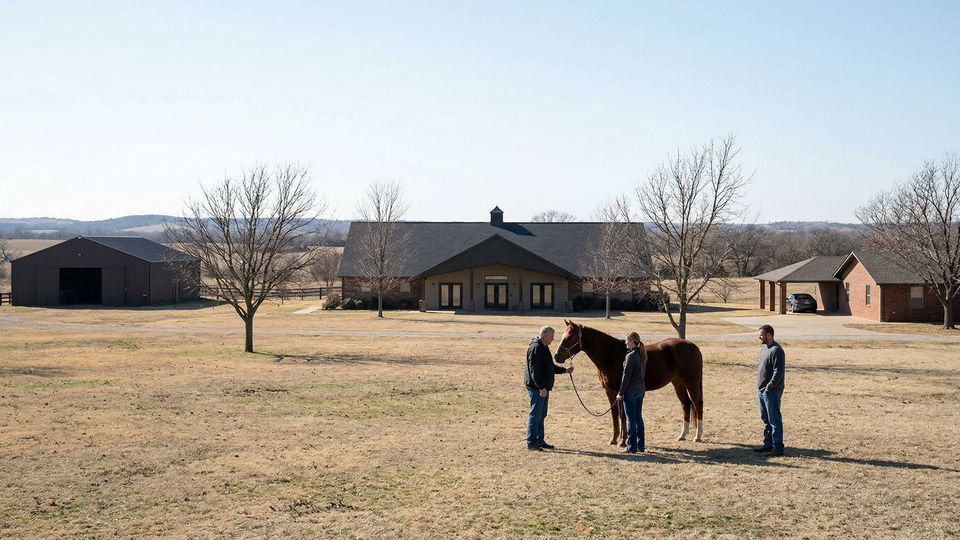
20 acres about an hour from OKC. Real distance from the environments tied to substance use.
28 Men, 16 Staff
Licensed therapists, LPCs, LADCs, case managers, and peer recovery specialists.
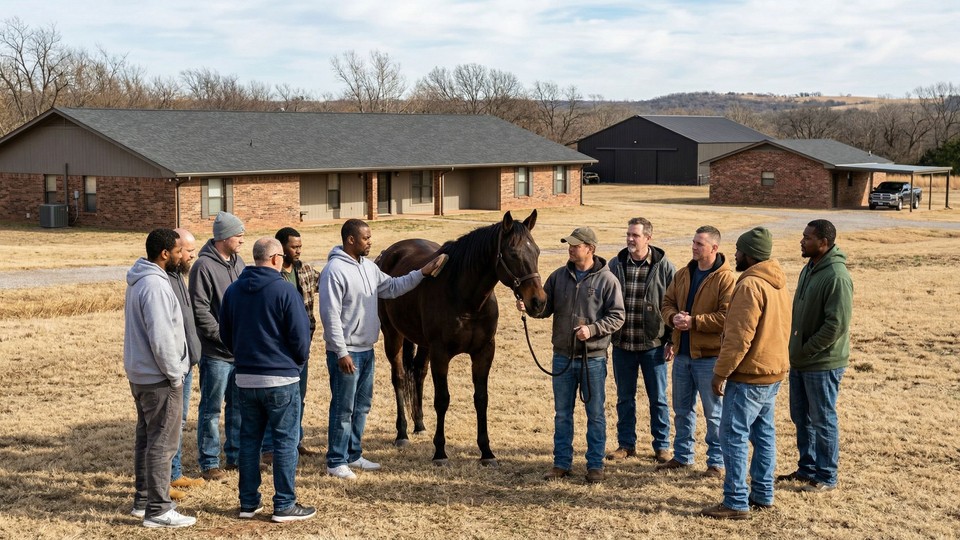
Equine Therapy
Horses, ponds, walking trails, weight room, disc golf, and a fire pit on campus.
Evidence-Based
CBT, DBT, trauma-informed care, and medication management all part of the model.
What happens after treatment ends?
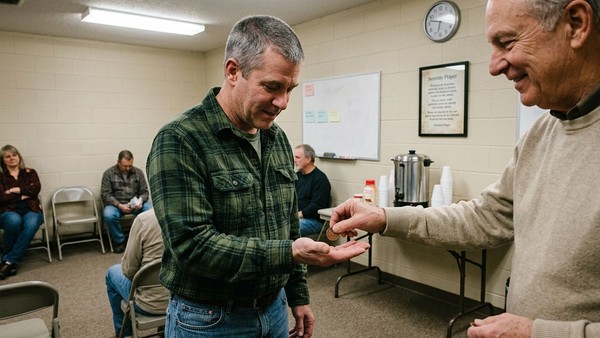
Every resident gets a continuing care plan before discharge. This includes planning for aftercare, connecting with local recovery support, and identifying next steps for maintaining sobriety outside the structure of residential treatment.
Relapse prevention programming runs throughout the stay so that the transition to everyday life is not a sudden drop-off. Staff work with each resident on case management goals, family reintegration, and connections to community resources.
How do I get started?
Admissions are available 24 hours a day, 7 days a week. Call (405) 374-6595 to speak with someone about eligibility, insurance verification, and next steps. If you have a court order related to treatment, bring that with you at intake. The team will walk you through what to expect and help coordinate a plan that fits your situation.
Still Have Questions?
Our admissions team is available around the clock. Whether you need to verify insurance, ask about the process, or just talk through your options, we are ready.
If you or someone you know is in crisis, contact the 988 Suicide & Crisis Lifeline by calling or texting 988. In an emergency, call 911.
National Institute on Drug Abuse (NIDA)
Principles of drug addiction treatment
SAMHSA’s National Helpline
1-800-662-4357 (free, 24/7)
American Society of Addiction Medicine (ASAM)
ASAM criteria for addiction treatment
Oklahoma Department of Mental Health and Substance Abuse Services
State treatment resources
Find A.A. Near You
Alcoholics Anonymous meeting locator
Find N.A. Near You
Narcotics Anonymous meeting locator